

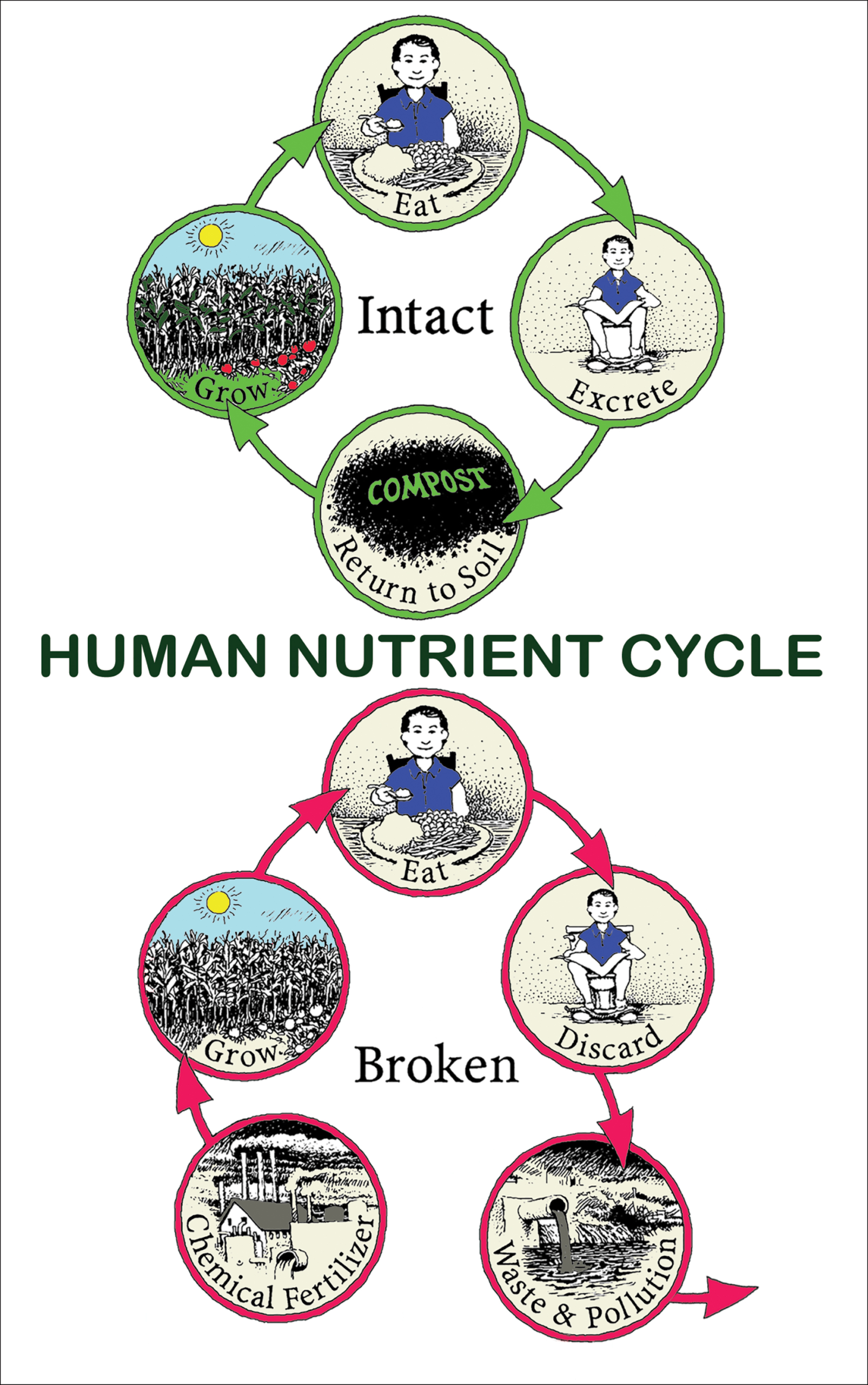
The Humanure Sanitation System collects human waste (urine, feces, and even vomit) for thermophilic (heat-producing) composting, which destroys pathogenic (disease-causing) organisms. The final product feeds the soil and enhances food production.
Instead of waste and pollution, it creates a product to regenerate the soil.

Components of the Humanure Sanitation System:
- Toilet – A waterproof container to collect human waste and toilet paper.
- Cover Material – A fine, carbon-based (plant cellulose) cover material to cover the human waste to prevent odors and flies. It also contributes to the thermophilic composting process which requires a certain ratio of ingredients, the bulk of which is carbon-based. Common cover materials are sawdust from trees and rice hulls.
- Compost Bins – Above-ground bins to hold material for thermophilic composting. A minimum amount of material is required for the compost to reach the desired temperatures. The contents of the toilet collection containers are placed in the compost bins for the microorganisms, who conduct the thermophilic composting, to process for a year.
To learn more about the Humanure Sanitation System, here is a paper written by Joseph Jenkins. And one in Spanish. You can find more information, books, and videos, on compost and humanure, at his site.

Español
El Sistema Sanitario Humanure recoge los residuos humanos (orina, heces e incluso vómitos) para compostaje termofílico (generador de calor), que destruye organismos patógenos (causantes de enfermedades). El producto final alimenta el suelo y mejora la producción de alimentos.
En lugar de residuos y contaminación, crea un producto para regenerar el suelo.
Componentes del Sistema de Saneamiento Humanure:
- Inodoro – Un recipiente impermeable para recoger desechos humanos y papel higiénico.
- Material de Cubierta – Un material fino de cobertura a base de carbono (celulosa vegetal) para cubrir los desechos humanos y prevenir olores y moscas. También contribuye al proceso de compostaje termofílico, que requiere una cierta proporción de ingredientes, la mayoría de los cuales son a base de carbono. Los materiales de cobertura comunes son el serrín de árboles y las cáscaras de arroz.
- Contenedores de Compost – Contenedores elevados para almacenar material para el compostaje termofílico. Se requiere una cantidad mínima de material para que el compost alcance las temperaturas deseadas. El contenido de los contenedores de recogida del inodoro se coloca en los contenedores de compost para que los microorganismos, que realizan el compostaje termofílico, lo procesen durante un año.
Para saber más sobre el Sistema de Saneamiento Humanure, aquí tienes un artículo escrito por Joseph Jenkins. Y otro en español. Puedes encontrar más información, libros y vídeos sobre compost y humanure, en su web.